The Birth of a Digital Movement
When the internet was still young and clunky, a quiet revolution began. Ordinary people discovered they could publish their thoughts online without needing a newsroom, a printing press, or a gatekeeper. What started as simple online journals quickly grew into one of the most influential communication tools of the modern era.
Blogging opened the door for anyone with a keyboard and an idea to speak to the world. It democratized publishing and reshaped how information spreads.
From Online Diaries to Global Platforms
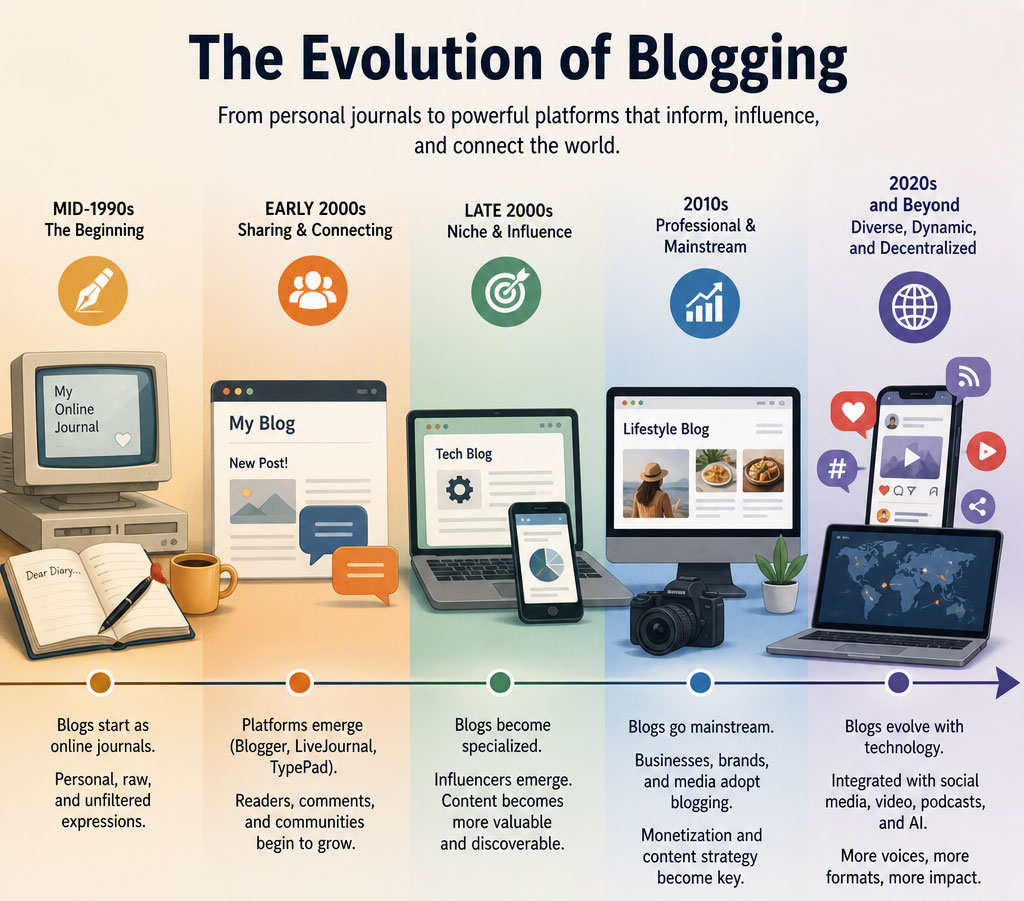
In the early days, blogs were personal spaces — digital diaries where people shared life updates, opinions, and reflections. But as the internet matured, blogging evolved into something far more powerful.
Writers began using blogs to:
-
Comment on politics
-
Teach skills
-
Build communities
-
Share faith
-
Report news
-
Launch businesses
Suddenly, bloggers weren’t just hobbyists. They were influencers, thought leaders, and entrepreneurs. The line between traditional media and online publishing blurred, and blogging became a legitimate force in shaping culture.
How Blogging Changed the Internet
Blogging transformed the web in several key ways:
-
It gave everyone a voice. No editors. No approval. Just publish.
-
It created two‑way communication. Readers could respond, debate, and build relationships.
-
It accelerated the spread of ideas. A single post could reach thousands overnight.
-
It birthed new industries. Content marketing, SEO, affiliate marketing, and online business all trace their roots back to blogging.
The internet became more personal, more interactive, and more human.
The Many Types of Blogs
As blogging grew, so did the variety of voices and topics. Today, blogs fall into several broad categories:
Political Blogs
Commentary, analysis, activism, and debate — political blogs became digital town squares where ideas clash and movements begin. In modern campaigns, blogging has become a standard tool for political candidates. Local or lesser‑known candidates often write their own posts, using blogs to connect directly with voters. High‑profile candidates, however, typically rely on campaign staff to manage and publish blog content on their behalf.
Christian & Faith‑Based Blogs
Devotionals, teaching, encouragement, and cultural commentary. These blogs help believers grow, connect, and navigate life through a biblical lens. For example, the Jeremiah Project—a blog I maintain—offers commentary on global events from a Christian perspective.
Diary & Personal Blogs
Still alive and well, these blogs focus on personal stories, life updates, and reflections. Even those with limited computer experience can easily publish entries using user‑friendly platforms like WordPress. Blogs have become a home for poems, prose, private thoughts, complaints, daily experiences, and more. Many personal blogs also invite readers to comment or contribute, creating a sense of community around shared experiences.
Professional & Industry Blogs
Experts use blogs to share insights, build authority, and attract clients. Nearly every profession now has its own blogging ecosystem. A sub-category is the career blog. These blogs center on a person’s craft, skill, or passion. They often highlight professional achievements, document career journeys, or provide insights into an industry.
Commercial & Business Blogs
Companies use blogs to educate customers, improve SEO, and drive sales. It’s one of the most effective marketing tools available.
Cultural Commentary Blogs
Covering trends, entertainment, society, and the shifting landscape of modern life.
Topical & Niche Blogs
Gardening, preparedness, silver stacking, wildlife, theology — if there’s a topic, there’s a blog for it. Their strength lies in specialization. For instance, my blog for Data Synthesis centers on the home‑based business industry, sharing insights and highlighting opportunities connected to the ventures I’m involved in.
Blogging Today: A Modern Evolution
Blogging didn’t fade with the rise of social media — it adapted.
Today’s blogging landscape includes:
-
AI‑assisted writing tools that help creators produce content faster
-
Micro‑blogging platforms like X and Threads
-
Video blogging through YouTube, TikTok, and reels
-
Long‑form content that still outperforms social media for trust and authority
-
SEO‑driven strategies that help posts rank and attract organic traffic
Blogging is no longer just writing — it’s multimedia storytelling.
Why Blogging Still Matters
Even with all the new platforms, blogging remains one of the most powerful ways to build influence online.
Here’s why:
-
You own your platform. Social media can ban you or bury your posts. Your blog is yours.
-
Search engines love blogs. Google rewards fresh, helpful content.
-
Blogs build trust. Long‑form writing creates authority in a way short posts never can.
-
Blogs create income. Ads, affiliate links, digital products, and services all flow from consistent content.
If you want a long‑term digital presence, a blog is still the foundation. I recommend any home‑based entrepreneur should build their business using a blog they own because a personal domain provides stability, authority, and long‑term visibility that social media can’t match; platforms change algorithms, limit reach, and distract visitors, while a self‑hosted blog gives full control over content, branding, lead capture, and conversions, allowing social media to serve as a feeder rather than the foundation of the business.
Final Thoughts
Blogging changed the internet — and it continues to shape how we communicate, learn, and share ideas. Whether you’re writing to teach, encourage, inform, or build a business, your blog is a powerful tool in a noisy world.
If you’re ready to start or revive your own blog, now is the perfect time. The tools are better, the opportunities are bigger, and your voice matters.