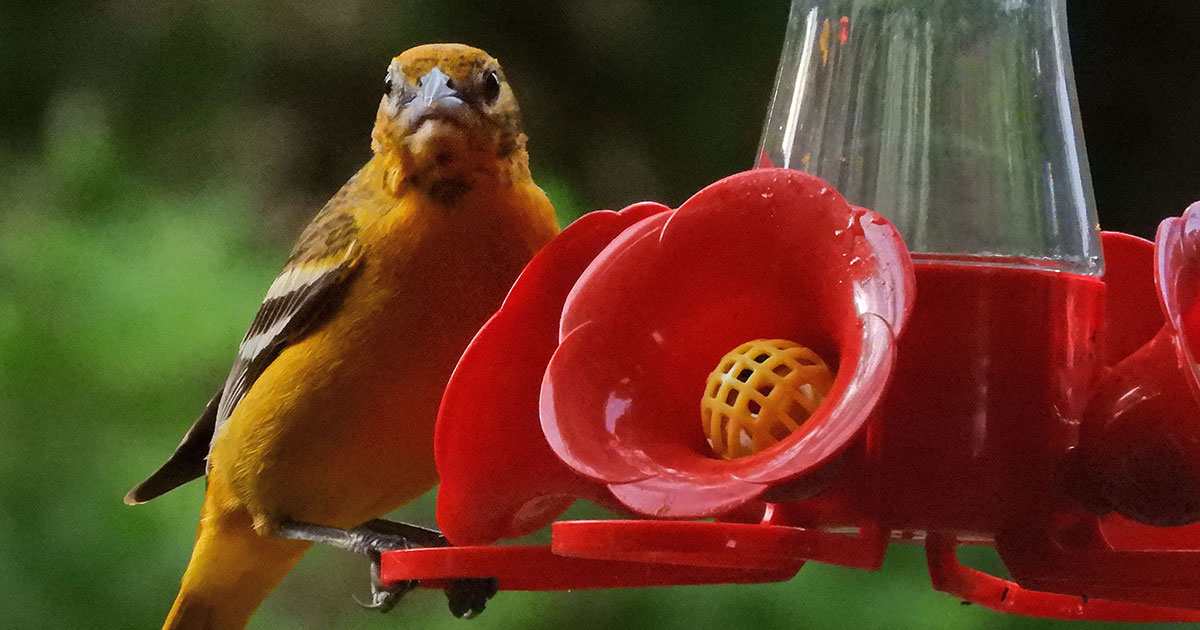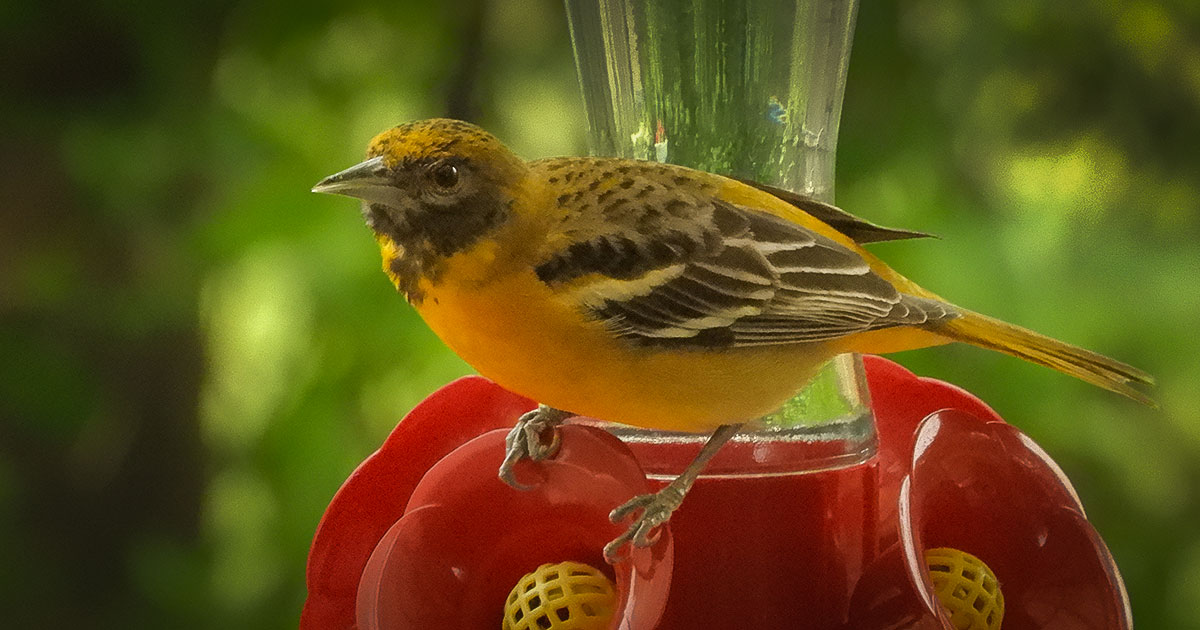
The Baltimore Oriole is one of the most eye‑catching songbirds in North America, and the contrast between the male and female makes them especially fascinating to watch. The male is the showstopper of the species—his plumage glows with a brilliant flame‑orange that seems almost lit from within. A jet‑black head, black back, and sharply defined black-and-white wings give him a bold, high‑contrast appearance that stands out immediately in the treetops. Even his tail carries that fiery orange, framed by darker central feathers. Males often arrive earlier in spring, singing loudly as they stake out territory and announce their presence.
I haven’t seen much of the Baltimore Oriole in my yard so when these showed up I was pretty excited.
The female Baltimore Oriole, by comparison, carries a softer beauty. Her coloring leans toward warm yellow‑orange and golden tones, with gentle gray or brown shading on the head and back. Her wings show the same pattern as the male’s but with far less contrast, giving her a more blended, subtle look.
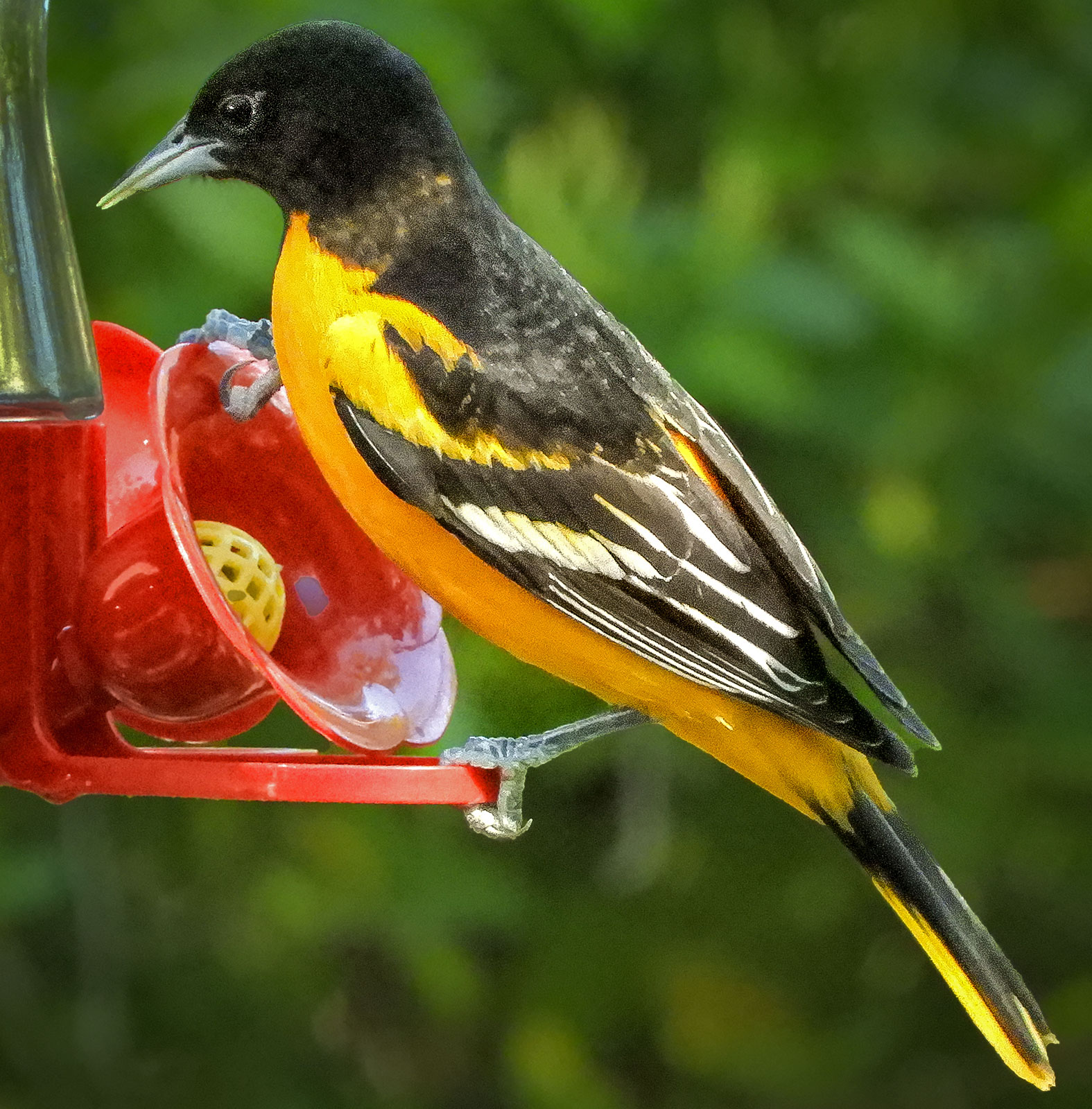
Baltimore Orioles have a surprisingly varied diet, and their preferences shift with the seasons. In early spring, when they arrive from migration, they crave quick energy—sweet foods like fruit, nectar, and anything sugary. Many bird enthusiasts put out oranges, berries, or grape jelly to attract them. Orioles are famous for loving grape jelly, but not every backyard flock follows the rule. In my own yard, I’ve tried offering jelly several times with very little success.
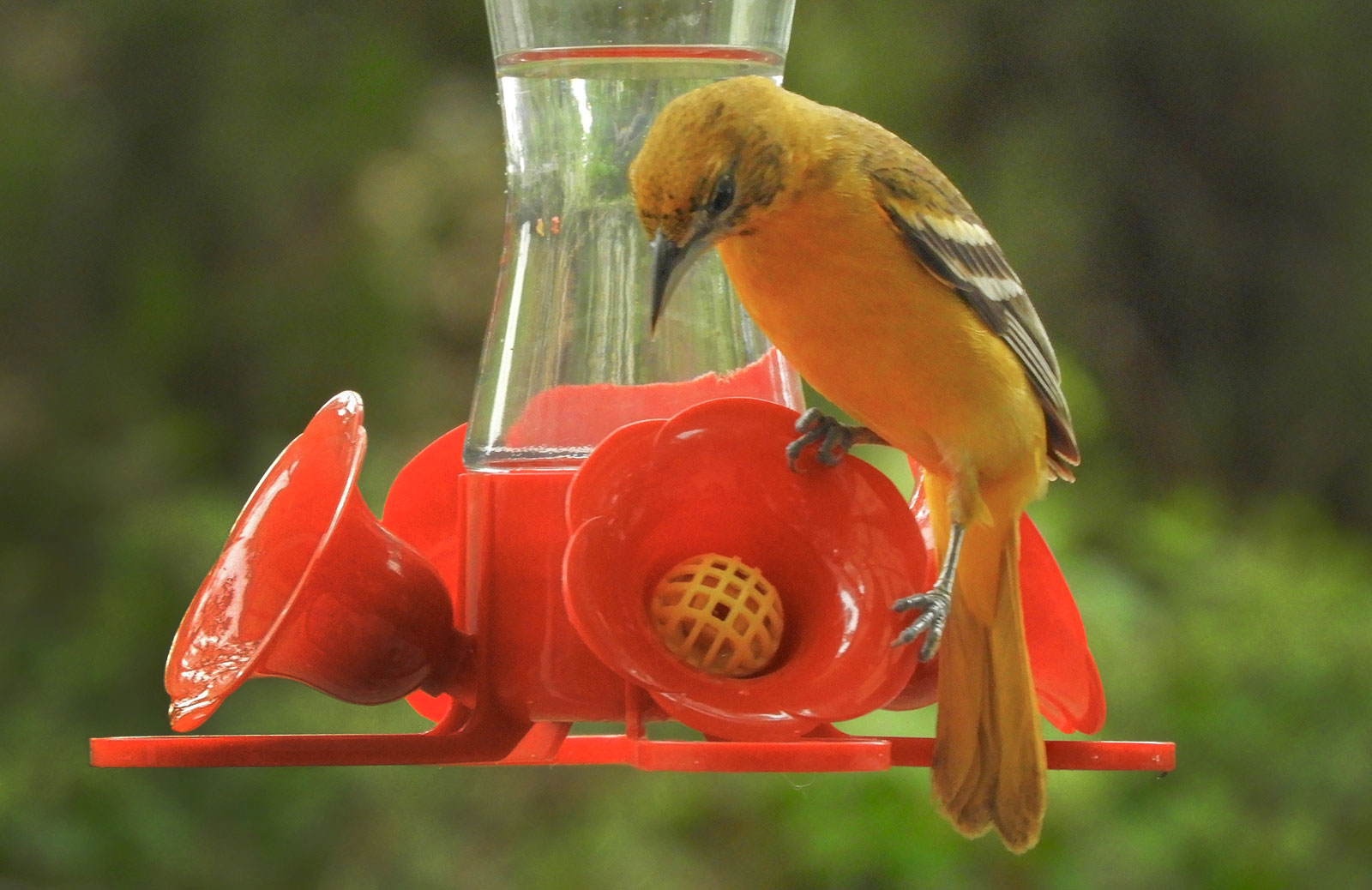
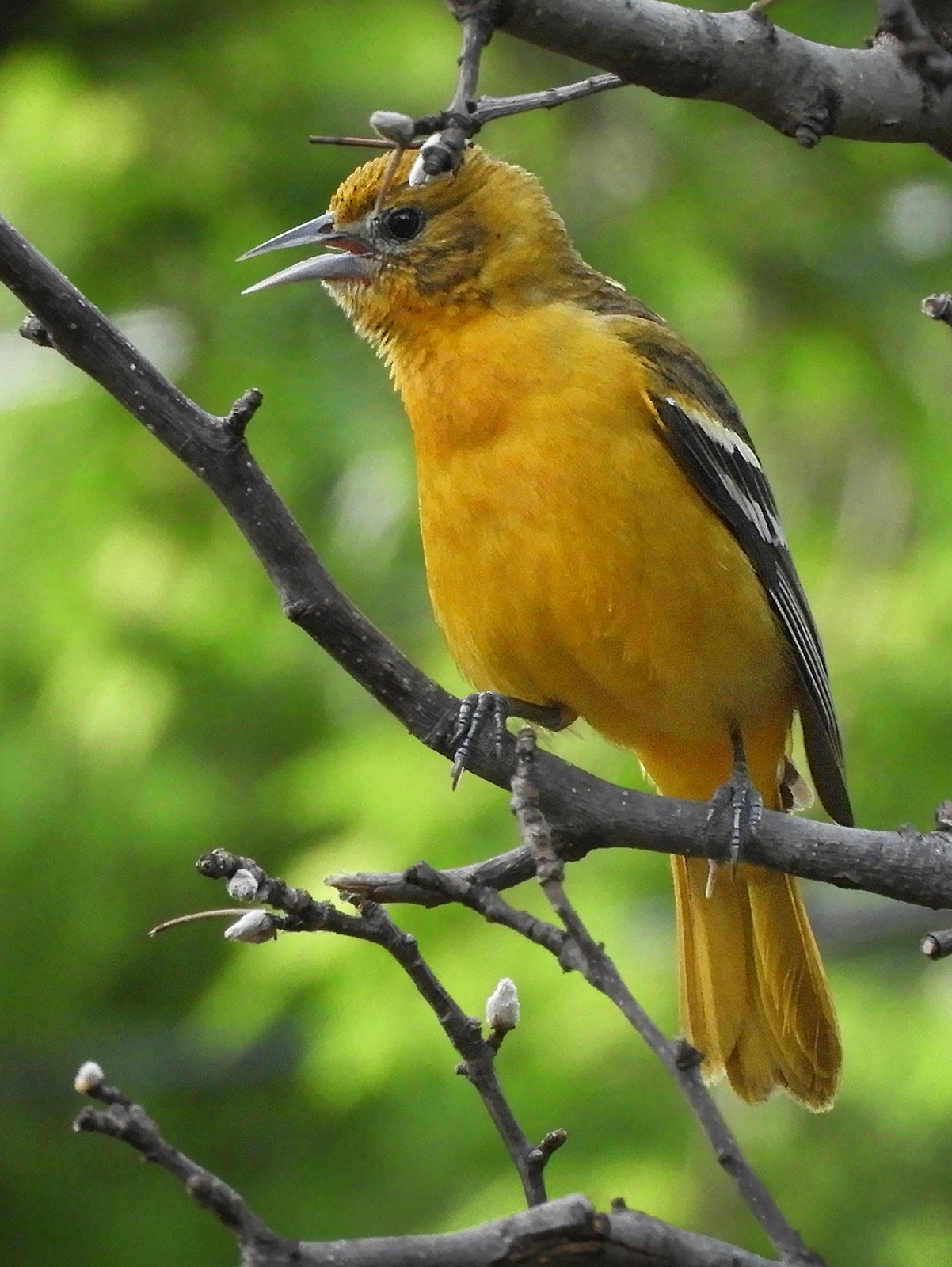
What they do seem to love, though, are my hummingbird feeders. Orioles are drawn to nectar, and if they can perch comfortably, they’ll happily drink from a hummingbird feeder just like a tiny sugar-loving acrobat. Their bright orange bodies hanging from a feeder meant for birds half their size is always a fun sight.