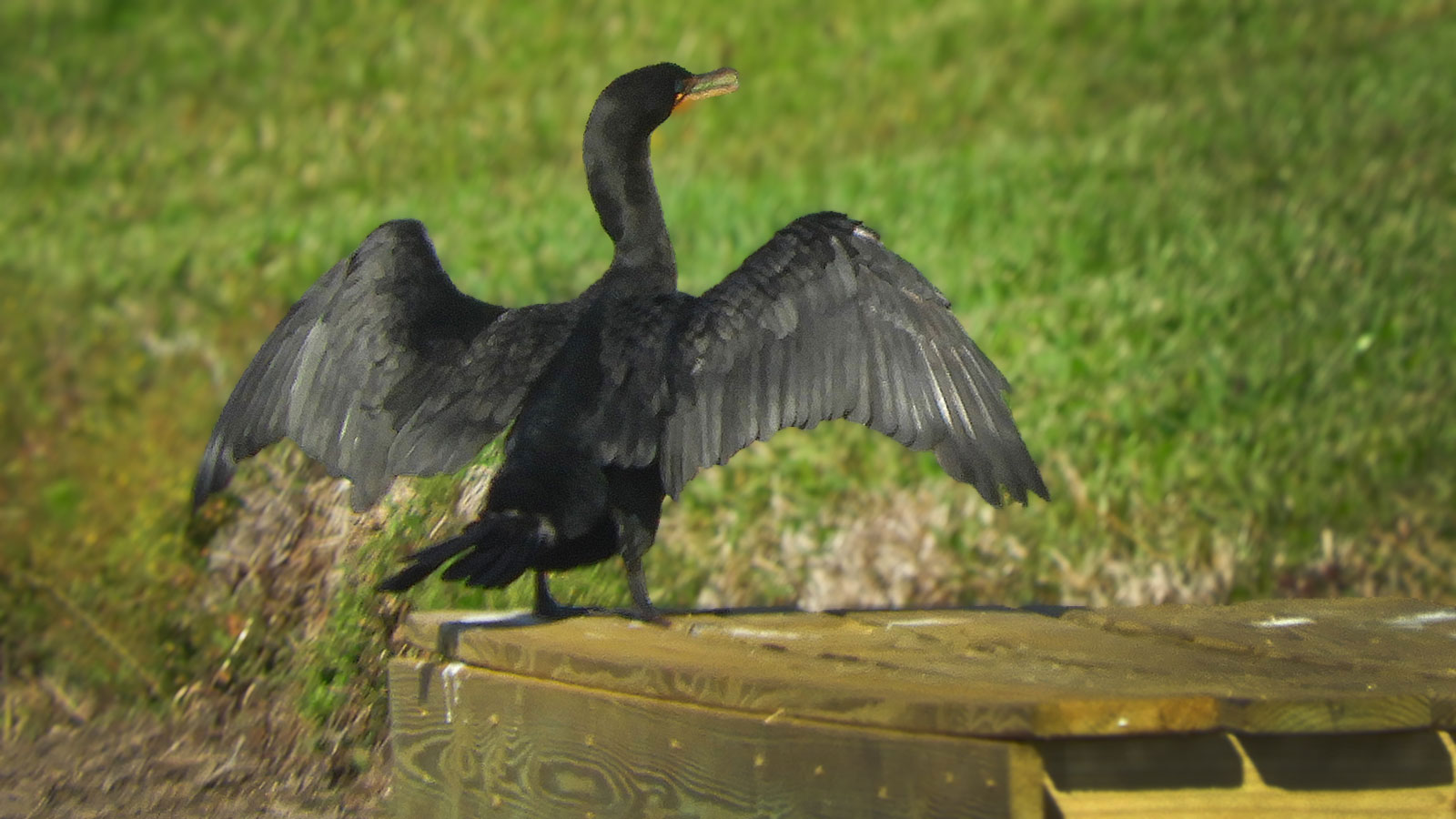
Spotting a Double‑crested Cormorant common across Florida’s freshwater lakes like Lake Clara in Sebring, Florida is always a treat. They’re one of those birds that look ordinary at first glance, but the more you watch them, the more fascinating they become. The Double‑crested Cormorant has a sleek, almost reptile‑like look — long neck, hooked bill, and dark, glossy feathers that shimmer in the Florida sun.
When they swim, they ride low in the water, sometimes with just their head and neck showing. It’s no wonder people mistake them for “snake ducks.” A “snake duck” isn’t an official species name — but it is a nickname people around lakes like Clara in Sebring sometimes use when they spot a bird that looks unusually long‑necked, snake‑like, or moves in a way that resembles a snake.

They swim low in the water with a snake‑like neck exposed. Cormorants are expert divers, plunging underwater and chasing fish with powerful webbed feet. They dive deep and stay under for long stretches. Cormorants can dive up to 25 feet and chase fish underwater with powerful webbed feet. They can stay submerged for 20–30 seconds at a time, twisting and turning like underwater torpedoes.
Their feathers aren’t fully waterproof, which helps them slip beneath the surface and move with surprising speed, and watching one perched near Lake Clara — wings stretched wide, turquoise eyes catching the light — is a vivid reminder of how alive and energetic Sebring’s waters really are as they stand tall on a dock, drying off after a deep dive like dark, elegant sentinels of the lake.