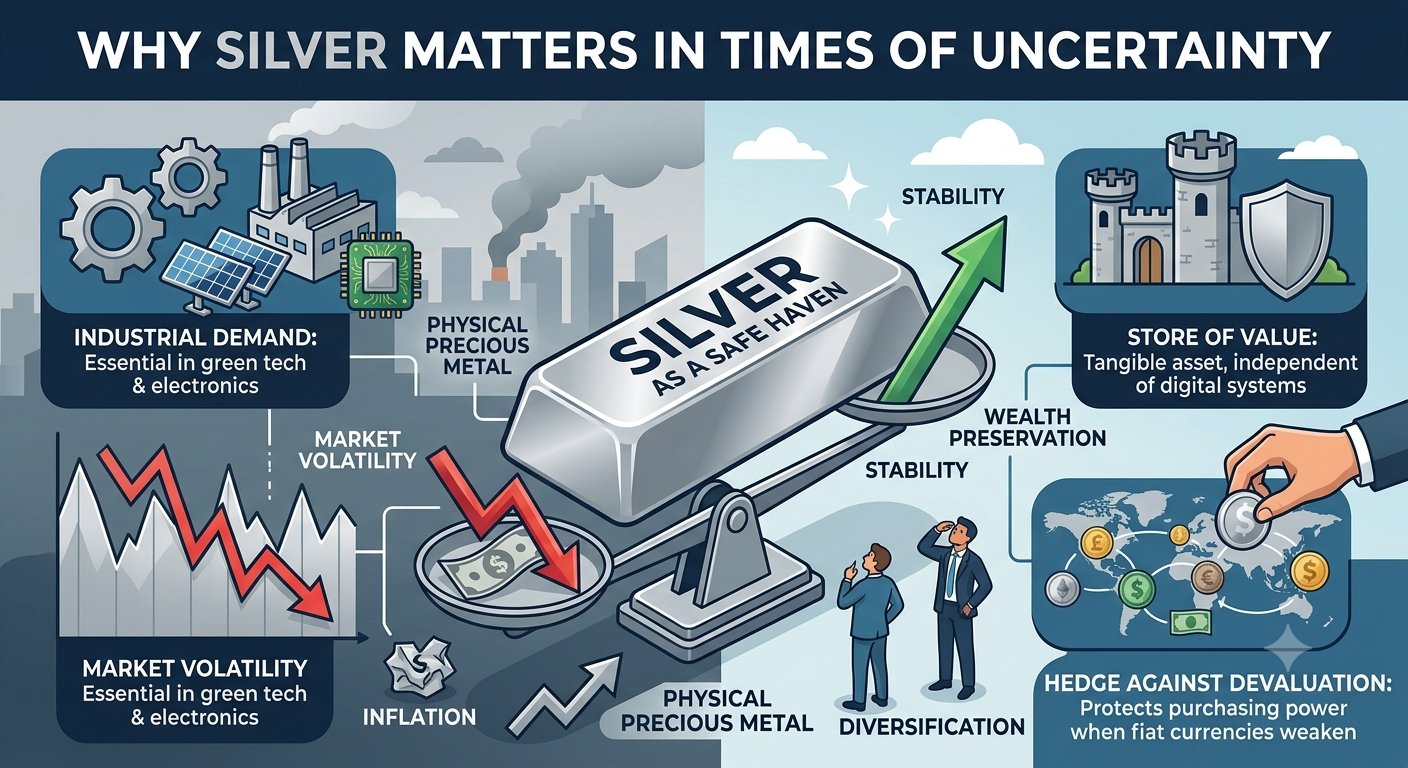
 Why Silver Matters in Times of Uncertainty
Economic uncertainty isn’t a theory anymore—it’s something we all feel. Prices rise, supply chains wobble, and digital systems we depend on show just how fragile they really are. That’s why more people are turning to silver as a practical, steady form of preparedness. Silver isn’t about fear. It’s about wisdom, stewardship, and having something real in your hands when the world gets noisy.
This guide will walk you through how silver fits into a balanced preparedness plan—how much to own, what types to buy, where to get it safely, and how it supports the essentials like food, water, power, and everyday resilience. If you’re building a plan for 2026 and beyond, silver deserves a place in it.
Silver has always been a practical hedge against economic instability. Unlike digital assets or paper promises, physical silver is tangible, durable, and universally recognized. In seasons of inflation, supply chain disruption, or currency volatility, silver offers everyday people a way to preserve value without relying on banks or markets.
Silver is also accessible. You don’t need a brokerage account, a financial advisor, or thousands of dollars to begin. You simply need a plan.
The Case for Preparedness
 Preparedness isn’t fear‑based—it’s wisdom‑based. It’s about taking simple, steady steps to ensure your household can thrive during:
- Economic downturns
- Food shortages
- Power outages
- Supply chain disruptions
- Natural disasters
- Banking instability
Preparedness gives you options, and options create peace.
Preparedness begins with the simple things—food, water, light, and the skills God gives us to care for our households. These are the everyday acts of stewardship that honor Him. But stewardship also includes how we handle the resources He places in our hands. That’s where silver comes in. It’s not a replacement for faith, and it’s not a source of security on its own. It’s simply a practical tool—something real, tangible, and steady—that supports the work you’re already doing to prepare your home with wisdom. As you strengthen the essentials, silver becomes one more way to walk responsibly into whatever tomorrow brings. Silver and preparedness go hand‑in‑hand because both are built on the same principle: Take responsibility for your future instead of outsourcing it.
Understanding Silver: What You Should Know Before Buying
Once we understand why silver is a steady, God‑honoring tool for preparedness, the next step is knowing which forms of silver serve that purpose best.
Types of Silver
Different forms of silver serve different purposes. Here are the most common:
1. Government‑Minted Coins
 Examples:
- American Silver Eagle
- Canadian Maple Leaf
- Austrian Philharmonic
Best for: Long‑term value, liquidity, and recognition.
2. Silver Rounds
 Privately minted, often lower premiums.
Best for: Stacking large amounts affordably.
3. Silver Bars
Sizes range from 1 oz to 100 oz.
Best for: Bulk stacking and efficient storage.
4. Junk Silver (Pre‑1965 U.S. Coins)
 Dimes, quarters, and half dollars with 90% silver content.
Best for: Small‑denomination barter and emergency use.
How Much Silver Should You Own?
With the different types of silver in view, it becomes important to discern how much is appropriate — balancing wisdom, responsibility, and the needs of your household. There’s no one-size-fits-all answer, but common preparedness guidelines include:
- 5–10% of your savings in precious metals
- A mix of recognizable coins and low‑premium rounds/bars
- Some junk silver for small transactions
The goal isn’t speculation—it’s stability.
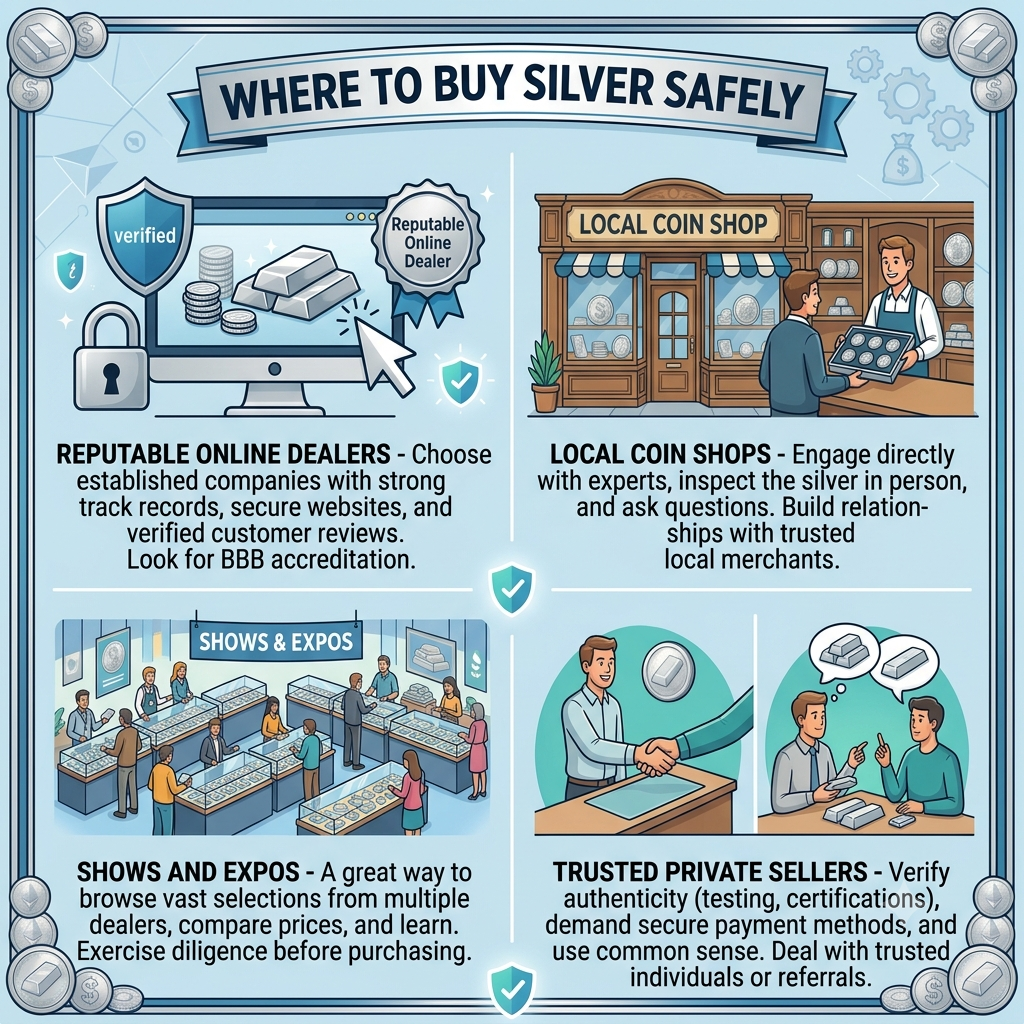
Where to Buy Silver Safely
Knowing your target amount is only half the journey; the next step is choosing trustworthy sources that align with wise stewardship. You can purchase silver from:
- Reputable online dealers
- Local coin shops
- Shows and expos
- Trusted private sellers
Avoid:
- Unknown sellers
- Social media deals
- “Too good to be true” pricing
Always verify authenticity and reputation.
Preparedness Essentials for 2026
1. Food Security
 A resilient household has:
- 30–90 days of shelf‑stable food
- A rotation system
- A mix of canned goods, dry goods, and freeze‑dried foods
- A small garden or container setup
2. Water
 Store at least:
- 1 gallon per person per day
- Filtration options (Berkey, Sawyer, LifeStraw)
3. Power & Lighting
 Simple essentials:
- Solar chargers
- Battery banks
- LED lanterns
- Backup generators (if feasible)
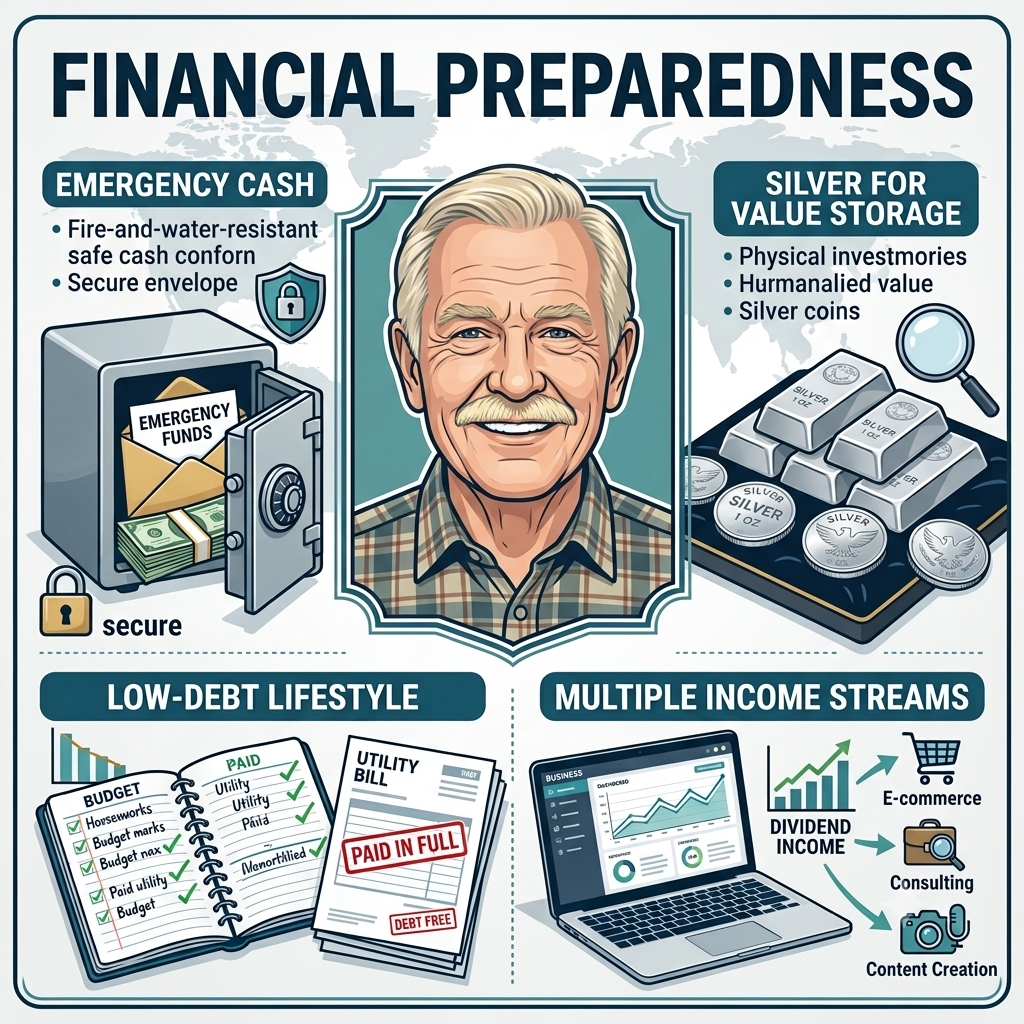 4. Financial Preparedness
- Emergency cash
- Silver for value storage
- Low‑debt lifestyle
- Multiple income streams
5. Skills
Preparedness isn’t just supplies—it’s capability.
Useful skills include:
- Gardening
- Basic repairs
- First aid
- Food preservation
- Situational awareness
How Silver Fits Into a Preparedness Lifestyle
Silver is not a standalone solution. It’s part of a broader strategy:
- Food keeps you alive.
- Water keeps you functioning.
- Skills keep you adaptable.
- Silver keeps your savings protected.
When combined, these create a household that can weather almost any storm.
Frequently Asked Questions
With the foundations in place, a few common questions remain — and answering them helps bring clarity and confidence to your preparedness plan.
What’s the difference between spot price and premium?
The spot price is the raw market value of silver, while the premium is the extra cost you pay for minting, manufacturing, and dealer overhead.
Should I dollar‑cost average into silver?
Dollar‑cost averaging into silver is a steady, disciplined way to build a position over time without trying to predict prices — a wisdom‑based approach rather than a timing‑based one.
Is silver better than gold?
Silver is more affordable and practical for everyday people. Gold is excellent for large-value storage. Most preparedness-minded households use both.
Can silver be used for barter?
Yes. Junk silver and 1 oz rounds are ideal for small transactions.
Should I buy coins, rounds, or bars first?
Start with coins, then rounds, then bars — in that order — because coins are the most recognizable and trusted, rounds offer lower premiums for steady stacking, and bars are best once you’re building larger weight efficiently.
Should I buy numismatic coins?
Generally, no — numismatic coins aren’t ideal for preparedness because their value depends on rarity and collector demand, not just silver content, making them harder to use, price, or liquidate in uncertain times.
Is junk silver still worth buying?
Yes — junk silver is still worth buying because it offers low premiums, easy recognition, and practical usefulness for small‑denomination barter, making it a simple, steady tool for preparedness rather than speculation.
Is silver risky?
Silver carries risk, but it’s the kind of risk that comes from price swings — not from the metal itself — which is why many people treat it as a long‑term hedge rather than something to “trade” or time. Counterparty risk is the danger that the other party in a financial transaction fails to meet their obligation — which is exactly the kind of risk physical silver helps you avoid because it has no counterparty attached to its value.
How do I store silver safely at home?
Store silver at home in a way that keeps it hidden, hardened, and protected — using a fire‑rated safe that’s bolted down, multiple small hiding locations instead of one big stash, and simple precautions like keeping it off‑site in rotation so no single point of failure exists.
Recommended Reading & Related Posts
- Types of Silver Coins
- Why Silver Is a Hedge Against Uncertainty
- Preparedness Basics for Beginners
- Economic Commentary & Practical Steps
- Accumulating Silver is the Smart Thing to Do
- Facts About Physical Gold and Silver Trading
- Preserve Your Wealth with Silver
Final Takeaway
Preparedness isn’t about fear—it’s about honoring the responsibility God places in our hands. Silver is simply one tool He allows us to use as we steward our resources wisely, protect our families, and walk with confidence into an uncertain world. As you build your plan for 2026 and beyond, let it be guided by faith, not anxiety; by wisdom, not worry; and by the assurance that God equips those who seek Him. Do what you can, trust Him with what you can’t, and move forward with peace. When you take small, steady steps to secure your household, you’re not just preparing for hard times. You’re building a lifestyle of resilience and confidence.
The information provided on this website is for educational and informational purposes only and should not be considered financial advice. I am not a licensed financial advisor, and guidance shared here reflects a faith‑centered perspective on stewardship and preparedness. It is not financial advice, nor is it intended to replace professional counsel. Each person’s situation is unique, and wise stewardship includes seeking qualified financial guidance when needed. The goal of this content is simply to encourage thoughtful, God‑honoring responsibility in how we manage the resources entrusted to us. Always consult a qualified financial professional who can evaluate your individual situation before making financial decisions.