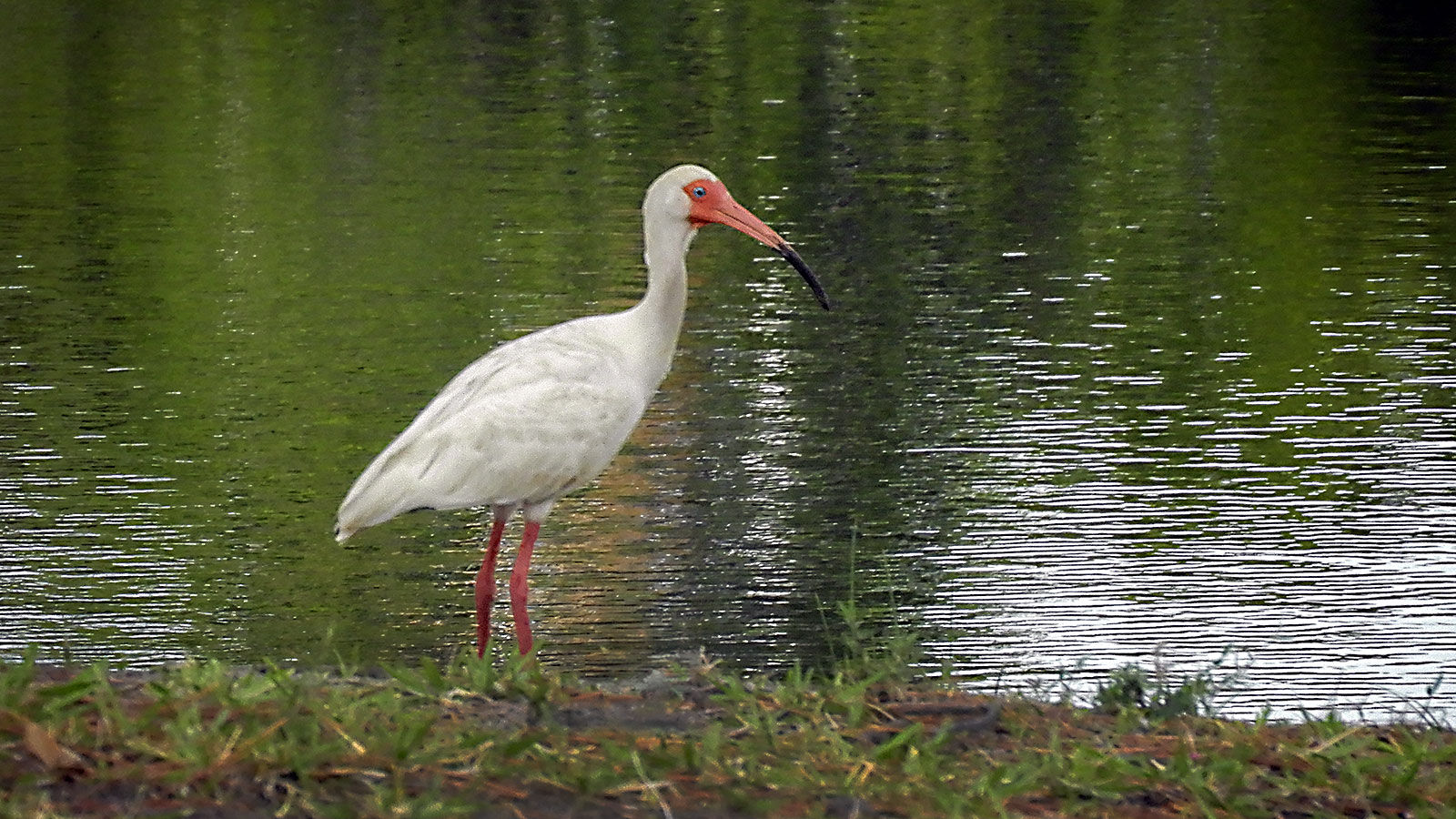
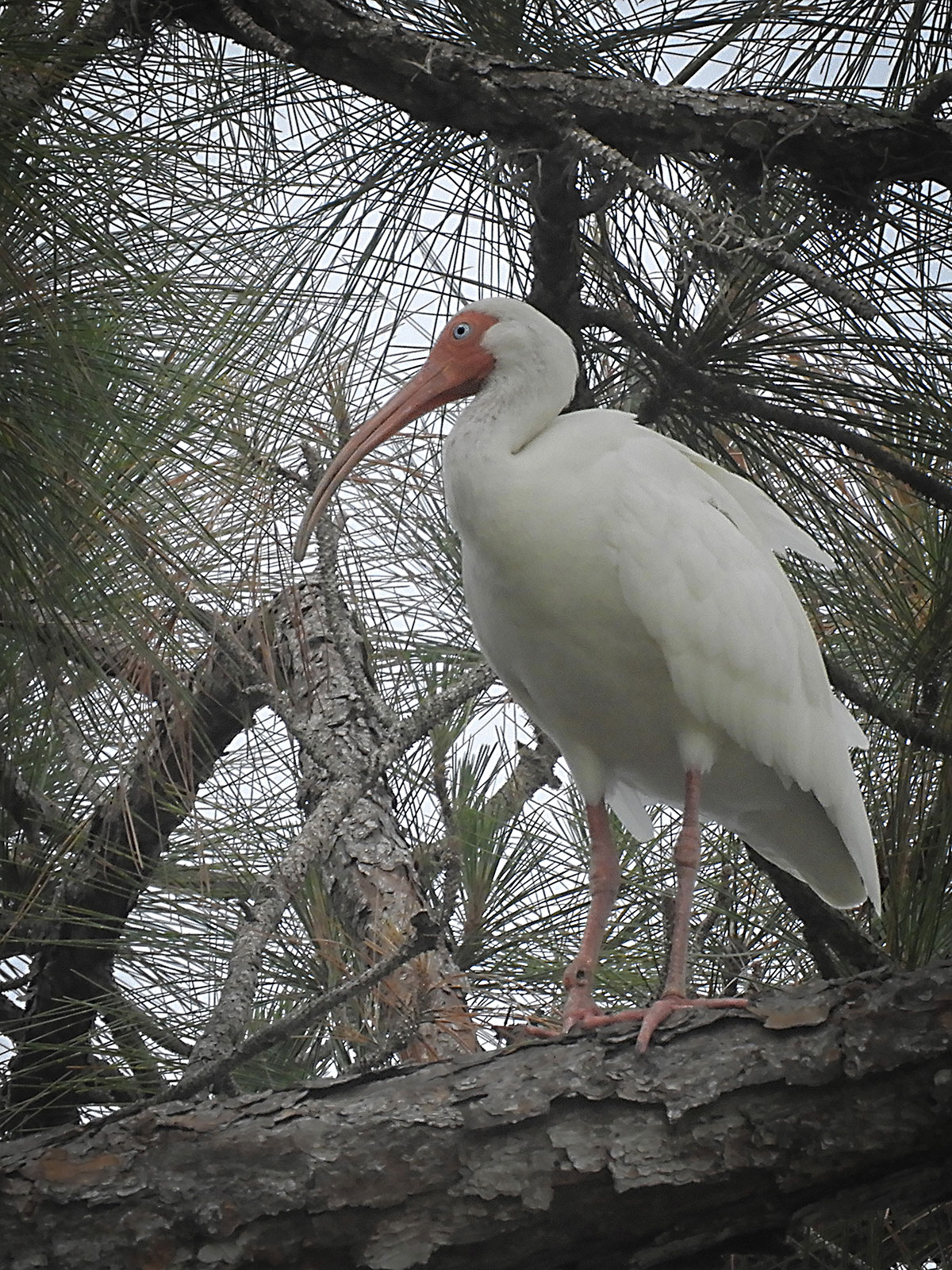
The American White Ibis is one of the most recognizable birds of the wetlands—bright white body, long curved red bill, and legs the color of sunset. It moves through marshes and coastal shallows in loose, chatty flocks, probing the mud for crayfish and insects with calm, methodical confidence.
Often seen strolling through parks, beaches, and even suburban lawns, the White Ibis brings a touch of wild Florida charm wherever it goes. Though its habitats face growing pressure, the species remains resilient, adapting to new spaces while still thriving in its native marshes. Gentle, social, and unmistakably elegant, the American White Ibis is a reminder of how wildlife can coexist with us—if we make room for it.
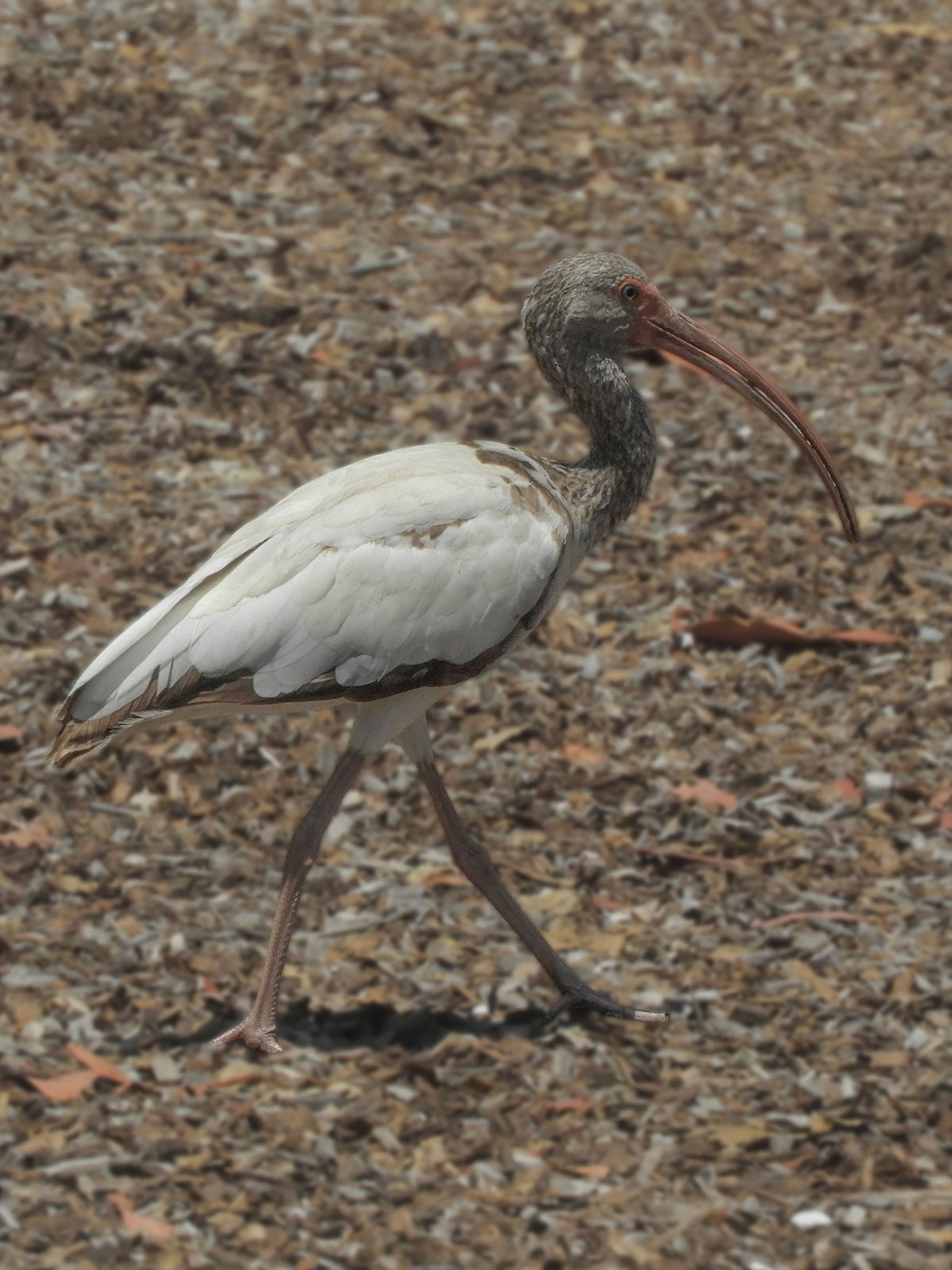
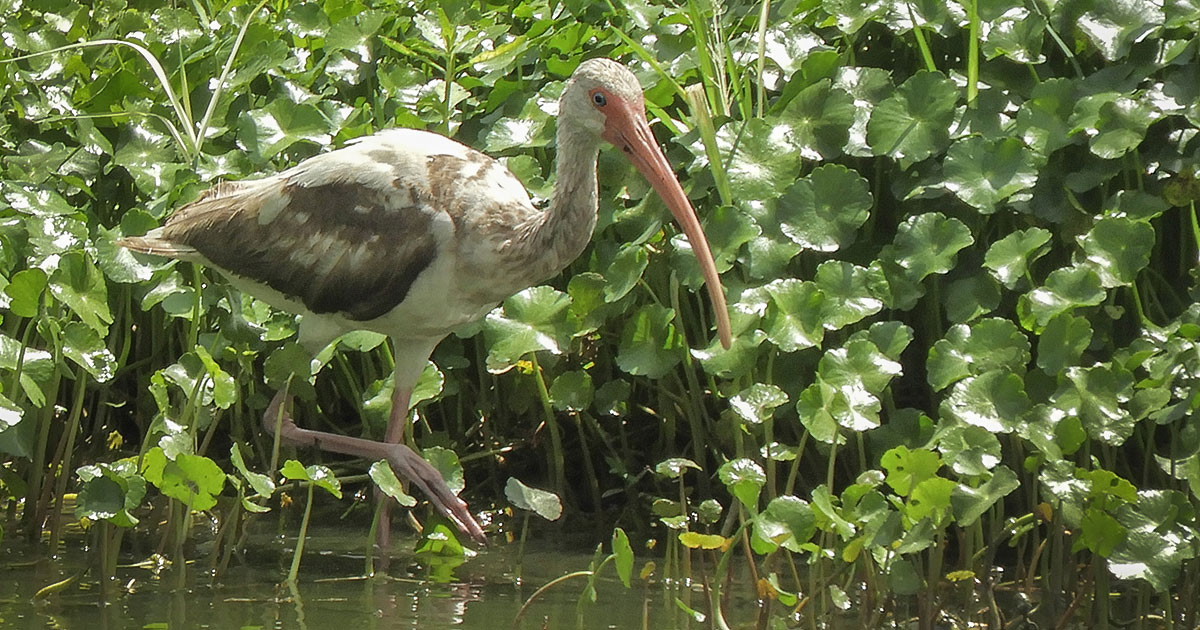
The juvenile American White Ibis is a striking, in‑between stage of one of Florida’s most recognizable wading birds. Instead of the clean white plumage of the adults, young ibises wear a mottled mix of brown, gray, and white, giving them a camouflaged look that blends easily into marsh grasses and muddy shorelines. Their long, downward‑curved bill—already fully formed—is a dull orange or brownish color rather than the bright red of maturity.